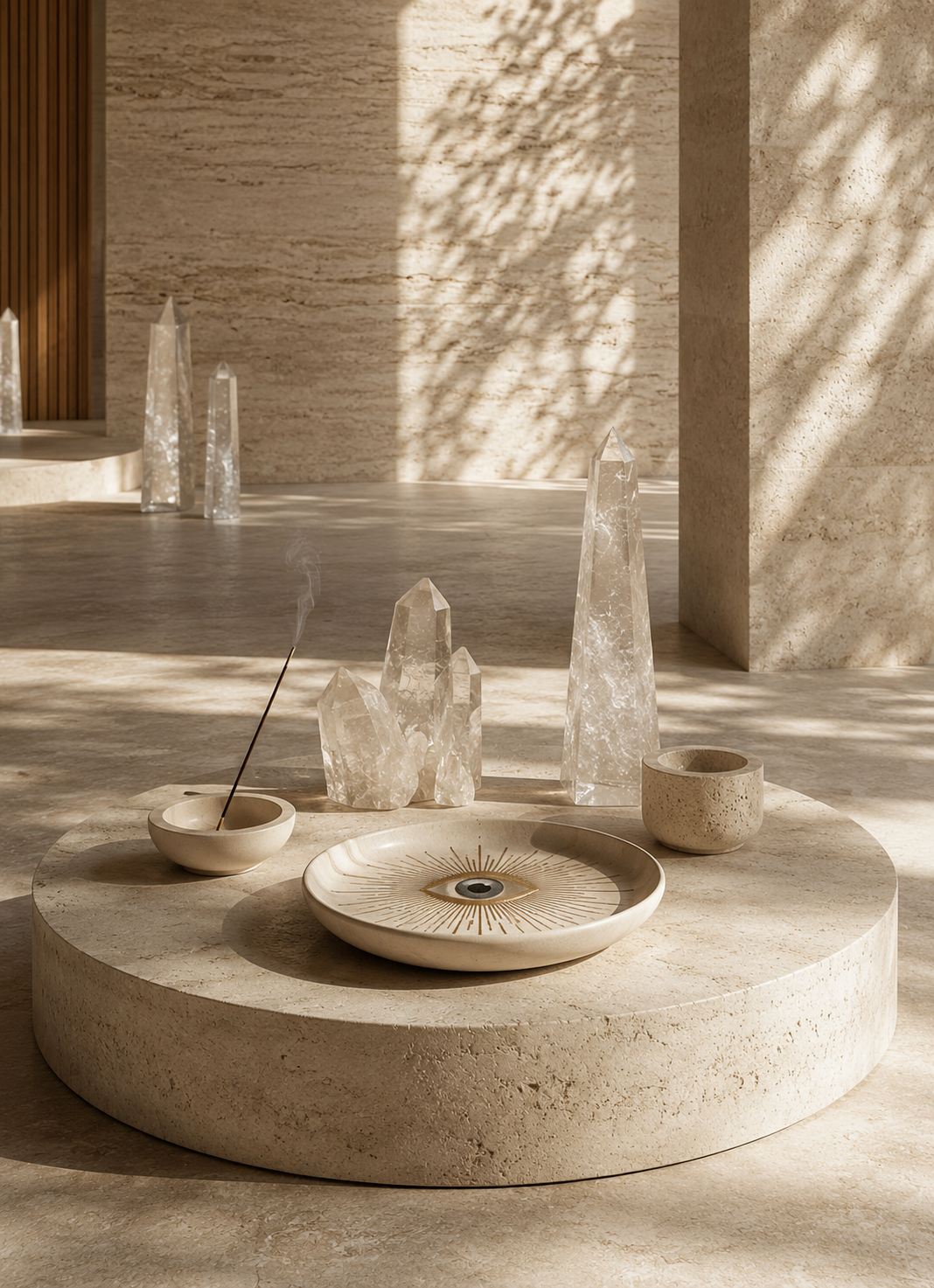
Qu'est-ce que la guérison énergétique ? Un guide doux pour la vie moderne
Vous n'avez pas besoin d'être spirituel pour sentir que quelque chose ne tourne pas rond.
Beaucoup de gens découvrent la guérison énergétique, non pas parce qu'ils sont en quête de croyances ou de rituels, mais parce qu'ils ressentent une fatigue que le sommeil ne suffit pas à dissiper. Un épuisement émotionnel. Un esprit dispersé. Un sentiment diffus d'être submergé par la vie moderne.
Chez Auratract, nous entendons souvent cette question sous différentes formes :
« La guérison énergétique m'intrigue, mais je ne sais pas vraiment ce que cela signifie, ni même si c'est fait pour moi. »
Ce guide est fait pour vous si vous recherchez de la clarté plutôt que des dogmes.
Si vous souhaitez une approche douce, ancrée et bienveillante, sans pression, promesse ni étiquette.
Un début en douceur : Pourquoi tant de gens s'intéressent à la guérison énergétique
Nous vivons dans un monde qui nous demande constamment d'aller plus vite, d'en faire plus et de rester connectés à tout moment. Avec le temps, ce rythme peut nous déconnecter de nous-mêmes, même si, en apparence, tout semble « aller bien ».
C'est à ce stade que la guérison énergétique entre souvent en jeu. Non pas comme un tournant spectaculaire, mais comme une douce curiosité.
Il ne s'agit pas d'échapper à la réalité ou de réparer quelque chose qui « clocherait » chez vous.
Pour beaucoup, il s'agit simplement de restaurer un équilibre, sur les plans émotionnel, mental et énergétique.
Et c'est là que les malentendus commencent souvent.
Qu'est-ce que la guérison énergétique, vraiment ? (Allier science et esprit)
À la base, la guérison énergétique est une pratique de soutien axée sur l'équilibre — pas sur la perfection, la transformation ou des résultats instantanés.
Bien que le terme « énergie » puisse sembler abstrait ou mystique, il peut aussi être compris sous un angle pratique : l'état du système nerveux. Dans le stress de la vie moderne, beaucoup de gens passent de longues périodes en état de « lutte ou fuite », régi par le système nerveux sympathique. Avec le temps, ce stress prolongé peut affecter la résilience émotionnelle, les tensions physiques et le bien-être général.
Les pratiques de guérison énergétique — comme la méditation, l'utilisation consciente de cristaux ou les rituels d'intention — sont souvent utilisées pour encourager en douceur un retour au système nerveux parasympathique, communément appelé état de « repos et digestion ».
Comme le notent des organismes tels que le Centre national pour la santé complémentaire et intégrative (NCCIH), les pratiques favorisant une relaxation profonde peuvent soutenir la gestion du stress et l'équilibre émotionnel en aidant le corps à atteindre des états plus calmes et régulés. Plutôt que de tenter de « réparer » quoi que ce soit par magie, la guérison énergétique se comprend mieux comme un moyen de revenir à l'équilibre, créant ainsi un espace pour que le corps et l'esprit puissent se reposer et se réinitialiser.
La guérison énergétique comme soutien émotionnel et énergétique
Chez Auratract, nous voyons la guérison énergétique comme une forme de soutien, tout comme la pleine conscience, la tenue d'un journal ou le repos intentionnel. Elle ne remplace pas les soins médicaux, la thérapie ou les conseils professionnels. Au contraire, elle les complète en favorisant la prise de conscience et le calme.
Il ne s'agit pas de croire en quelque chose de nouveau.
Il s'agit de remarquer ce qui se passe déjà en vous.
Il ne s'agit pas de changer qui vous êtes
L'une des idées fausses les plus répandues sur la guérison énergétique est qu'elle cherche à vous changer.
En réalité, c'est tout le contraire. La guérison énergétique ne vous demande pas d'être plus spirituel, plus positif ou plus aligné. Elle vous invite simplement à ralentir suffisamment pour écouter.
Parfois, cela suffit.
La guérison énergétique est-elle un système de croyances ou une pratique ?
C'est l'une des questions les plus fréquentes, et une question importante.
La guérison énergétique n'est pas une religion et ne nécessite ni foi ni identité spirituelle. Vous n'avez pas besoin de suivre de rituels, de traditions ou de règles. Vous n'avez pas besoin d'adopter un nouveau langage ou de nouvelles croyances.
Beaucoup de gens pratiquent des routines basées sur l'énergie sans jamais les nommer ainsi : allumer une bougie pour marquer la fin d'une longue journée, ouvrir les fenêtres pour rafraîchir une pièce, tenir une pierre dans les moments de stress, ou créer des routines apaisantes avant de dormir.
Ces actions ne reposent pas sur la croyance. Elles reposent sur l'intention et la conscience.
La guérison énergétique au quotidien
La guérison énergétique n'a pas besoin d'être spectaculaire. Dans la vie moderne, elle se manifeste souvent de manière subtile :
-
Créer des espaces calmes chez soi
-
Nettoyer les résidus émotionnels après des interactions stressantes
-
S'ancrer avant le repos ou la réflexion
-
Établir de petits rituels qui signalent la sécurité et la pause
Ces moments ne demandent ni temps, ni performance, ni explication. Ils offrent simplement de l'espace.
Formes courantes de guérison énergétique que vous connaissez peut-être déjà
La guérison énergétique ne prend pas une forme unique. De nombreuses pratiques recoupent ce que les gens utilisent déjà pour la relaxation, la réflexion ou le soutien émotionnel.
Cristaux et pierres
Les cristaux sont souvent mal compris comme des outils aux résultats garantis. En réalité, beaucoup les utilisent comme objets d'ancrage ou rappels d'intention — quelque chose de physique qui concentre l'attention lors de moments émotionnels.
Différentes pierres sont traditionnellement associées à différentes qualités, comme le calme, la clarté ou l'équilibre émotionnel. Mais leur valeur réside souvent dans la façon dont elles soutiennent la concentration et la présence.
Guérison par le son
Le son est utilisé depuis longtemps pour influencer l'humeur et la relaxation. Les bols chantants, les carillons ou les fréquences douces peuvent aider à signaler au système nerveux de ralentir.
La guérison par le son n'est pas une performance, c'est une question de résonance. Beaucoup de gens trouvent le son utile lors de la méditation, de l'écriture ou des routines du soir.
Pratiques de purification
Les pratiques de purification, comme la combustion de sauge ou de palo santo, sont souvent associées au nettoyage d'un espace plutôt qu'à l'obtention d'un résultat. Ces rituels créent une pause — un moment pour réinitialiser l'intention et l'atmosphère.
Chez Auratract, nous encourageons à aborder la purification comme un acte conscient, et non comme un rituel régi par des règles. Il s'agit de conscience, pas d'obligation.
Rituels de pleine conscience
Parfois, la guérison énergétique ne ressemble à rien d'autre qu'à une tranquillité constante : respirer profondément, s'asseoir avec une tasse de thé, sortir prendre l'air ou choisir le calme plutôt que la distraction.
Ces pratiques ne nécessitent aucune explication, seulement la permission.
Ce que la guérison énergétique n'est pas
La clarté renforce la confiance, donc c'est important.
La guérison énergétique n'est pas :
-
Une forme de magie
-
Une promesse de transformation instantanée
-
Un remplacement pour les soins médicaux, psychologiques ou professionnels
Elle ne décharge pas de ses responsabilités et ne permet pas d'éviter les défis du monde réel. Au contraire, elle soutient l'espace intérieur à partir duquel nous les affrontons.
La guérison énergétique fonctionne mieux lorsqu'elle est abordée en douceur, sans attente ni pression.
Comment débuter la guérison énergétique en douceur (sans se sentir dépassé)
Si vous êtes curieux mais incertain de la manière de commencer, la simplicité est primordiale.
Étape 1 : Remarquer sans juger
Commencez par remarquer comment vous vous sentez — physiquement et émotionnellement — sans essayer de mettre une étiquette ou de réparer quoi que ce soit. La conscience est souvent la première forme d'équilibre.
Étape 2 : Choisir un outil doux
Cela peut être un cristal, un bol sonore, un rituel de purification ou un moment de respiration au calme. Choisissez quelque chose qui vous semble naturel, et non forcé.
Étape 3 : Créer un petit moment répétable
La constance importe plus que l'intensité. Quelques minutes, répétées régulièrement, créent souvent un meilleur ancrage que des routines élaborées.
Il n'est pas nécessaire d'ajouter la guérison énergétique à votre vie ; elle peut être tissée dans ce qui existe déjà.
Pourquoi la guérison énergétique résonne avec la vie moderne
Dans une culture qui valorise la productivité et la vitesse, la guérison énergétique offre quelque chose de rare : la permission de ralentir.
Elle n'exige ni croyance, ni performance, ni identité. Elle soutient simplement la présence.
Pour beaucoup de gens, cela suffit.
Chez Auratract, nous pensons que la guérison énergétique ne consiste pas à échapper à la réalité, mais à la rencontrer avec plus de conscience, de calme et de compassion.
Une dernière pensée : La guérison énergétique comme cheminement personnel
Il n'y a pas de bonne façon d'aborder la guérison énergétique.
Vous n'avez pas besoin d'étiquettes.
Vous n'avez pas besoin de règles.
Vous n'avez pas besoin de le faire parfaitement.
La guérison énergétique est une relation personnelle avec vous-même, une relation qui évolue avec le temps, la curiosité et la bienveillance.
Et parfois, le changement le plus puissant n'est pas du tout spectaculaire.
C'est simplement le moment où vous faites une pause, respirez et choisissez d'écouter.
Foire aux questions (FAQ)
La guérison énergétique est-elle religieuse ?
Non. La guérison énergétique n'est liée à aucune religion ou système de croyance spécifique. Elle est couramment abordée comme une pratique de bien-être ou de pleine conscience axée sur l'équilibre, la relaxation et la connaissance de soi. Des personnes de tous horizons s'engagent dans ces pratiques sans aucun cadre religieux.
Puis-je pratiquer la guérison énergétique seul(e) ?
Oui. De nombreuses pratiques énergétiques sont simples et peuvent être réalisées en autonomie. Des activités comme la méditation, la respiration consciente ou le fait de tenir des cristaux en toute conscience sont souvent utilisées comme des rituels de relaxation personnelle qui peuvent être intégrés au quotidien.