Was ist der böse Blick? Das antike Symbol im modernen minimalistischen Wohnen
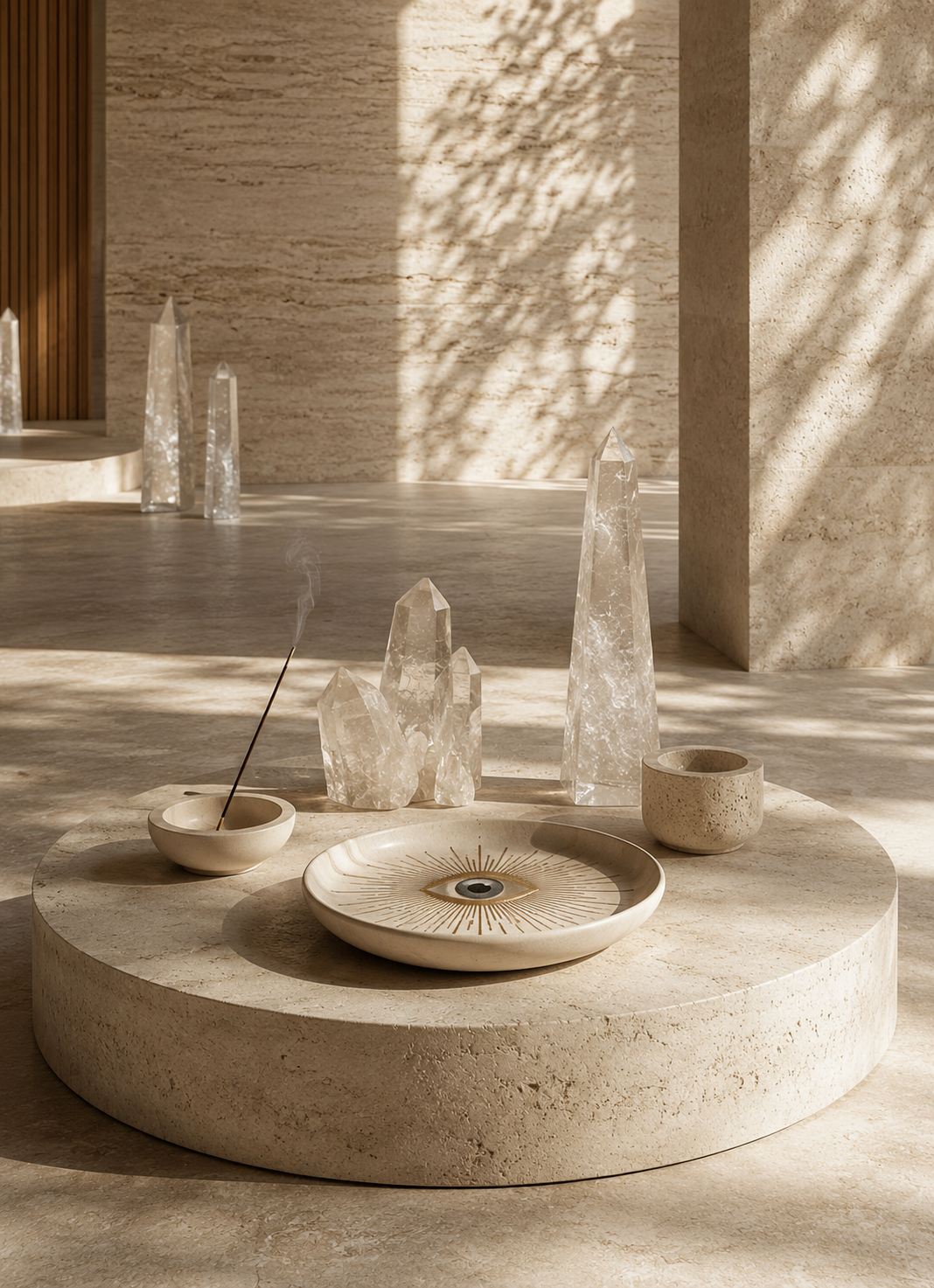
Stellen Sie sich einen ruhigen Nachmittag zu Hause vor. Licht fällt durch das Fenster und wirft weiche Schatten durch den Raum. Auf einem Steintablett nahe dem Eingangsbereich liegt ein kleines, vertrautes Motiv: ein Auge.
Wahrscheinlich haben Sie den bösen Blick schon auf Schmuck, Schlüsselanhängern, Keramiken, Wandbehängen und kleinen Gegenständen gesehen, die in der Nähe einer Tür aufbewahrt werden. Oft erkennt man ihn an einer blau-weißen Perle in Augenform, doch die dahinterstehende Vorstellung ist älter und vielfältiger als dieses einzelne Design.
Der böse Blick ist eine traditionelle Vorstellung von der Kraft eines neidischen oder schädlichen Blicks, Unglück zu bringen, während die mit dieser Vorstellung verbundenen Schutzamulette diesen Blick abwehren sollen. Die Vorstellung und das Amulett hängen zusammen, sind aber nicht genau dasselbe. In verschiedenen Kulturen und Epochen verwendeten Menschen viele Formen von Schutzgegenständen - nicht nur das bekannte blaue Auge.
Auch heute verstehen manche Menschen den bösen Blick weiterhin durch Religion, Familientradition oder kulturelle Bräuche. Andere tragen das Symbol oder stellen es aus persönlicher Erinnerung an Schutz, Grenzen und die Art von Energie zur Schau, die sie in ihrer Nähe bewahren möchten. Es kann Bedeutung haben, ohne als wissenschaftlich erwiesener Schutzschild betrachtet werden zu müssen.
Was ist der böse Blick?
Die Bezeichnung „böser Blick“ bezieht sich traditionell auf einen schädlichen Blick, der oft mit Neid, Eifersucht, Bewunderung oder bösen Absichten verbunden wird. In vielen Traditionen glaubte man, dass dieser Blick Pech, Krankheit oder andere Formen des Unglücks verursachen könne.
Der Schutzgegenstand ist etwas anderes: ein Amulett oder Symbol, das getragen, mitgeführt oder an einem Ort aufgestellt wird, um den bösen Blick abzuwehren. Diese Unterscheidung ist wichtig, weil modernes Design das augenförmige Amulett oft als Kurzform für „den bösen Blick“ verwendet, obwohl der gefürchtete Blick und der Gegenstand, der vor ihm schützen soll, historisch zwei getrennte Vorstellungen sind.
Das bedeutet auch, dass es kein einziges universelles Symbol für den bösen Blick gibt. Augenmotive sind eine wichtige Form, doch Schutztraditionen verwenden auch Hände, Perlen, Steine, Inschriften, Spiegel, Farben und andere Amulette. Bedeutungen und Bräuche können sich von einer Gemeinschaft zur anderen erheblich unterscheiden.
Eine Schutzvorstellung mit vielen kulturellen Geschichten
Der böse Blick wird online manchmal so dargestellt, als stamme er aus einem einzigen Ort, einer einzigen Religion oder einer klar umrissenen antiken Geschichte. Seine Geschichte ist jedoch komplizierter. Vorstellungen von schädlichen oder neidischen Blicken gab es im gesamten Mittelmeerraum, im Nahen Osten, in Nordafrika, auf dem Balkan, in Südasien und in anderen Regionen. Dabei entwickelten verschiedene Gemeinschaften ihre eigenen schützenden Bräuche und Gegenstände.
Augenförmige Amulette selbst haben ebenfalls eine lange Geschichte. Altägyptische Wedjat-Augenamulette etwa wurden mit Schutz, Heilung und Erneuerung in Verbindung gebracht. Anderswo haben Schutzobjekte gegen den bösen Blick ganz unterschiedliche Formen angenommen. Der gemeinsame Kern ist kein standardisiertes Design, sondern der menschliche Wunsch, das Wertvolle vor Neid, Gefahr oder unerwünschter Aufmerksamkeit zu schützen.
Deshalb ist es sinnvoll, sich dem Symbol mit etwas Kontext zu nähern. Ein modernes blaues Glasauge mag auf der ganzen Welt vertraut sein, sollte jedoch nicht als die einzige „authentische“ Version der Tradition betrachtet werden. Kulturelle Bedeutung liegt ebenso in den Praktiken rund um ein Objekt wie in seiner Form.
Warum ist der böse Blick normalerweise blau?
Das konzentrische blau-weiße Auge ist eine der bekanntesten modernen Formen des Amuletts gegen den bösen Blick, insbesondere in der türkischen Bildkultur sowie in Teilen des Mittelmeerraums und angrenzender Regionen. Seine Beliebtheit hat dazu geführt, dass Blau in der zeitgenössischen Mode und im Dekor fast untrennbar mit dem Symbol verbunden ist.
Blau ist jedoch keine universelle Voraussetzung, und die Farbbedeutungen sind nicht in jeder Tradition identisch. Schutzamulette gibt es in vielen Materialien und Farben, von Glas und Metall bis hin zu Stein, Textilien und Keramik.
Für die moderne Verwendung ist es besser, Farbe als Teil der kulturellen Geschichte und des Designs des Objekts zu betrachten, anstatt jedem Farbton starre Versprechen zuzuschreiben. Ein kobaltblaues Auge kann traditionell und grafisch wirken; eine neutrale Interpretation aus Keramik fügt sich vielleicht unauffälliger in einen minimalistischen Raum ein. Die Symbolik kann erkennbar bleiben, selbst wenn sich die Designsprache verändert.
Warum das Symbol bis heute nachwirkt
Wir leben in einer ganz anderen Welt als die Menschen, die einst Schutzamulette trugen, doch die emotionalen Themen hinter dem bösen Blick sind leicht wiederzuerkennen: Neid, Sichtbarkeit, Vergleich, Aufmerksamkeit und der Wunsch, das zu schützen, was wichtig ist.
Soziale Medien haben diese Themen besonders vertraut gemacht. Wir sehen mehr vom Leben anderer Menschen, und mehr Menschen können unser Leben sehen. Das bedeutet nicht, dass ein passiv-aggressiver Kommentar oder das Scrollen auf Instagram buchstäblich ein „böser Blick“ ist. Doch die alte Symbolik kann überraschend modern daran erinnern: Nicht jede Meinung verdient Zugang zu deiner inneren Welt.
Für jemanden, der sich mit der Tradition verbunden fühlt, kann das Tragen oder Aufstellen des Symbols spirituelle oder kulturelle Bedeutung haben. Für jemanden, der sich ihm auf persönlichere Weise nähert, kann es als visueller Anker für Grenzen dienen - innezuhalten, bevor man die Stimmung eines anderen übernimmt, zu bemerken, wenn der Vergleich überhandnimmt, oder sich daran zu erinnern, dass Privatsphäre eine Form der Fürsorge sein kann.
Der Wert muss nicht aus Angst entstehen. Er kann aus Achtsamkeit entstehen.

Das Böse Auge im Alltag tragen
Schmuck ist eine der einfachsten Möglichkeiten, das Motiv bei sich zu tragen, da es Teil einer gewöhnlichen Routine werden kann, statt etwas zu sein, das besonderen Ritualen vorbehalten ist. Ein kleiner Anhänger, ein Armband oder ein Paar Ohrringe kann optisch dezent sein und dennoch persönliche Bedeutung tragen.
Die tragbarste Variante ist meist diejenige, die sich ganz natürlich in das einfügt, was Sie bereits besitzen. Manche bevorzugen klassisches blaues Glas oder Emaille, weil es sich mit dem vertrauten Schutzmotiv verbunden anfühlt. Andere fühlen sich zu Gold, Silber, Muschel, Keramik oder minimalistischer interpretierten Varianten hingezogen.
Wenn Sie ein Stück wegen seiner Symbolik auswählen, beginnen Sie mit der Bedeutung, statt zu versuchen, ein kompliziertes Set aus „Energien“ zusammenzustellen. Fragen Sie sich, ob das Objekt Sie an Schutz, Beständigkeit, Familie, Glauben oder eine Grenze erinnert, die Sie wahren möchten.
Die Kollektion zum Bösen Auge von Auratract bringt das Motiv in zurückhaltenden Schmuck und kleine Wohnaccessoires, die sich leicht in den Alltag integrieren lassen, statt übermäßig zeremoniell zu wirken.
Wenn Sie ebenfalls Kristallschmuck tragen, gibt es keine allgemeingültige Regel, die besagt, dass beides nicht kombiniert werden kann. Unser Leitfaden zum gemeinsamen Tragen des Bösen Auges und von Kristallen befasst sich speziell damit, wie ihre symbolischen Bedeutungen nebeneinander bestehen können, ohne jede Kombination in ein starres Schema zu verwandeln.

Das Böse Auge in ein minimalistisches Zuhause integrieren
Ein Schutzsymbol muss keinen Raum beherrschen. In einem ruhigen, natürlichen Interieur kann ein kleines Objekt ausreichen, um einen bedeutungsvollen Blickfang zu schaffen, ohne visuelle Unruhe hinzuzufügen.
Der Eingangsbereich ist ein beliebter Ort für ein Böses Auge, weil er die Schwelle zwischen Außenwelt und Zuhause bildet. Wenn dieser Platz für Sie eine Bedeutung hat, kann eine kleine Schale, ein hängendes Stück oder ein Objekt auf einer Konsole zu einem Hinweis werden, einen Teil des Tages an der Tür zurückzulassen. Es ist besser, dies als symbolische Platzierung zu betrachten und nicht als einen allgemein vorgeschriebenen oder „wirksamsten“ Ort.
Ein Schreibtisch kann sinnvoll sein, wenn das Symbol Sie daran erinnert, Ihre Aufmerksamkeit während der Arbeit zu schützen. Ein Nachttisch kann persönlicher wirken. In einem Regal kann es zwischen Büchern, Keramik oder im Laufe der Zeit gesammelten Gegenständen stehen, statt zu einer separaten spirituellen Präsentation zu werden.
Dieser Ansatz passt ganz natürlich zu einem minimalistischen oder vom Wabi-Sabi inspirierten Zuhause: weniger Gegenstände, aber mehr Bedacht bei denjenigen, die Sie behalten. Wenn Sie eine ruhigere Ecke statt eines formellen Altars gestalten, konzentriert sich unsere Kollektion für ein achtsames Zuhause auf kleine Objekte, die einen ruhigeren, bewussteren Raum unterstützen.
Kann ein Böses Auge die Energie Ihres Zuhauses schützen?
Im traditionellen Glauben werden Schutzamulette verwendet, um das Böse Auge abzuwehren. In einem modernen Zuhause setzen Menschen diese Praxis möglicherweise weiterhin spirituell, kulturell oder symbolisch fort. Das Objekt sollte jedoch nicht als wissenschaftlich erwiesenes Mittel dargestellt werden, das negative Energie entfernt oder Schutz vor anderen Menschen garantiert.
Wenn das Symbol Ihnen hilft, sich daran zu erinnern, Grenzen zu setzen, einen überfüllten Eingangsbereich neu zu ordnen, am Ende des Tages den Laptop zu schließen oder bewusst zu entscheiden, was Sie in Ihre Aufmerksamkeit lassen, erfüllt es bereits eine bedeutungsvolle Funktion.
Für einen umfassenderen Blick auf den Unterschied zwischen der Reinigung eines Raums und dem Bewahren dieses Gefühls danach beleuchtet unser Ratgeber zur Reinigung und dem Schutz eines sich bedrückend anfühlenden Zuhauses sowohl praktische Gewohnheiten als auch symbolischen Schutz.
Die Bedeutung respektieren und es zu Ihrem eigenen machen
Es gibt einen Unterschied zwischen der Anpassung eines Symbols an Ihr Zuhause und dem vollständigen Entzug seines Kontexts. Das Böse Auge hat für viele Menschen lebendige kulturelle, religiöse und familiäre Bedeutungen. Eine minimalistische Interpretation löscht diese Geschichte nicht aus.
Sie müssen keine Tradition nachahmen, die nicht Ihre eigene ist, oder Kräfte für sich beanspruchen, an die Sie nicht glauben. Sie können erfahren, was das Symbol bedeutet, verstehen, dass Praktiken unterschiedlich sind, und sich für ein Stück entscheiden, weil seine Botschaft von Schutz oder Grenzen Sie aufrichtig anspricht.
Das ist eine überlegtere Art, ein altes Symbol in ein modernes Leben zu integrieren: nicht als Trend, der seiner Bedeutung beraubt wurde, und nicht als Versprechen, dass ein einziger Gegenstand kontrollieren kann, was um dich herum geschieht, sondern als etwas, das du wahrnimmst und zu dem du zurückkehrst.
Ein sanfter Anker
Es hat etwas Faszinierendes an einem Symbol, das nach außen blickt und dich zugleich auffordert, dich um das zu kümmern, was in dir liegt.
Das Böse Auge hat sich gehalten, weil Vorstellungen von Neid, Aufmerksamkeit, Schutz und Verletzlichkeit zutiefst menschlich sind. Diese Vorstellungen wurden in verschiedenen Kulturen und Jahrhunderten unterschiedlich zum Ausdruck gebracht und verändern sich weiter, während sich das Symbol durch Schmuck, Innenräume, Mode und Alltagsgegenstände bewegt.
Unabhängig davon, ob das Motiv Teil deiner kulturellen Tradition oder einer spirituellen Praxis ist oder einfach als bedeutungsvolle Erinnerung dient, muss es nicht die Last tragen, alles für dich zu erledigen. Lass es die Grenze markieren. Den Rest übernehmen deine Gewohnheiten, Entscheidungen und Beziehungen.
Häufig gestellte Fragen zum Bösen Auge
Was ist das Böse Auge?
Das Böse Auge ist der traditionelle Glaube an die Macht eines neidischen oder schädlichen Blicks, Unglück zu bringen. Schutzamulette, die mit diesem Glauben verbunden sind, werden getragen, mitgeführt oder ausgestellt, um diesen Blick abzuwehren. Der Glaube selbst und das schützende, augenförmige Symbol stehen miteinander in Verbindung, sind aber nicht genau dasselbe.
Ist das Symbol des Bösen Auges dasselbe wie der Glaube an das Böse Auge?
Nein. Traditionell bezeichnet das „Böse Auge“ den schädlichen Blick. Die augenförmige Perle oder ein anderes Schutzamulett soll davor schützen. In der modernen Sprache wird „Böses Auge“ oft für beides verwendet, weshalb die Unterscheidung verschwimmen kann.
Was bedeutet das blaue Böse Auge?
Blau-weiße Augenperlen gehören heute zu den bekanntesten Formen von Schutzamuletten, aber Blau ist keine allgemeingültige Voraussetzung, und die Farbbedeutungen variieren je nach Tradition. Es ist besser, das blaue Auge als eine kulturell vertraute Form zu verstehen, statt der Farbe selbst eine garantierte Wirkung zuzuschreiben.
Wo sollte man ein Böses Auge in seinem Zuhause platzieren?
In allen Traditionen gibt es keinen einheitlich vorgeschriebenen Platz. Eingangsbereiche sind heute eine beliebte Wahl, weil sie symbolisch die Schwelle des Hauses markieren. Aber auch ein Schreibtisch, ein Regal oder ein Nachttisch kann sinnvoll sein, wenn der Gegenstand dort eine persönliche Bedeutung hat.
Kann man das Böse Auge und Kristalle zusammen tragen?
Ja. Es gibt keine allgemeingültige Regel, die verhindert, beide zusammen zu tragen. Wenn beide für dich eine Bedeutung haben, betrachte ihre Assoziationen als sich ergänzende Symbole und nicht als feste Formel oder garantierte energetische Wirkung.