Ein Feng-Shui-Ratgeber für Ihr Zuhause: Mit östlicher Weisheit Energie und Freude einladen
Sind Sie schon einmal in ein Zuhause gekommen und haben sofort gedacht: „Hier fühlt es sich einfach gut an“? Manchmal liegt es am Licht, manchmal daran, dass die Möbel Bewegungsfreiheit lassen, und manchmal einfach an dem Gefühl, dass alles seinen Platz hat.
Feng Shui beginnt mit dieser Beziehung zwischen Menschen und ihrer Umgebung. Es ist eine traditionelle chinesische Praxis, die sich damit befasst, wie Räume ausgewählt, ausgerichtet und angeordnet werden. Die chinesischen Schriftzeichen feng und shui bedeuten „Wind“ und „Wasser“. Verschiedene Schulen verwenden unterschiedliche Methoden, daher gibt es keine universelle Checkliste, die auf jedes Zuhause zutrifft.
Dieser Leitfaden konzentriert sich auf anfängerfreundliche Ideen, die Sie im Alltag wahrnehmen können: den Eingang, durch den Sie nach Hause kommen, den Weg, den Sie durch einen Raum gehen, den Standort Ihres Bettes oder Schreibtischs und die Gegenstände, die Sie um sich haben möchten.
Was Feng Shui im Zuhause bedeutet
Im traditionellen Feng Shui bezeichnet Qi die Vorstellung einer Lebensenergie, die sich durch Menschen, Orte und die natürliche Welt bewegt. Praktiken nutzen Ausrichtung, Form, Richtung und Platzierung, um mit dieser Beziehung zu arbeiten.
Qi ist ein traditionelles Konzept und keine wissenschaftlich messbare Kraft. Feng Shui sollte daher nicht als garantierte Methode zur Verbesserung von Gesundheit, Einkommen oder Glück betrachtet werden. Zugleich sind viele der Fragen, die dabei im Alltag gestellt werden, praktisch: Können Sie sich bequem durch den Raum bewegen? Wirkt der Eingangsbereich gepflegt? Können Sie von Ihrem Arbeitsplatz oder Bett aus die Tür sehen? Bietet der Raum Ihrer Aufmerksamkeit einen Ort zum Ausruhen?
Beginnen Sie mit dem Zuhause, nicht mit den Symbolen
Bevor Sie über Kristalle, Glücksbringer, Farben oder Himmelsrichtungen nachdenken, betrachten Sie zunächst den Raum selbst.
Achten Sie darauf, wo sich Schuhe an der Tür sammeln, ob ein Stuhl einen natürlichen Durchgang versperrt oder ob Ihr Schreibtisch zu einer Ablage für ungeöffnete Post geworden ist. Feng Shui wird oft in Begriffen des Flusses beschrieben; praktisch kann das mit freien Wegen, einer sinnvollen Anordnung, ausreichend Licht und etwas Abstand zwischen den Gegenständen beginnen.
Sie brauchen kein leeres, minimalistisches Zuhause. Ziel ist lediglich, den Raum leichter begehbar und angenehmer zum Zurückkehren zu machen.
Einfache Feng-Shui-Ideen für alltägliche Räume
Schenken Sie dem Eingangsbereich Aufmerksamkeit
Der Haupteingang ist in vielen Feng-Shui-Traditionen wichtig und wird manchmal als „Mund des Qi“ bezeichnet. Halten Sie den Weg zur Tür gut begehbar, achten Sie auf eine angenehme Beleuchtung und geben Sie Alltagsgegenständen wie Schuhen, Schlüsseln und Taschen einen festen Ablageort. Eine Pflanze, ein kleines Kunstwerk oder ein persönlicher Gegenstand kann den Bereich einladend wirken lassen, ohne ihn in eine Ausstellung zu verwandeln.
Sorgen Sie dafür, dass sich die Bewegung durch den Raum natürlich anfühlt
Gehen Sie so durch den Raum, wie Sie es normalerweise tun würden. Wenn Sie sich ständig seitlich an einem Tisch vorbeidrehen, über Stauraum hinwegsteigen oder sich zwischen Möbeln hindurchzwängen müssen, überlegen Sie, ob sich etwas umstellen lässt. In der Sprache des Feng Shui wird dies oft als Unterstützung für einen freieren Fluss des Qi beschrieben; im Alltag macht es den Raum einfach angenehmer und weniger frustrierend nutzbar.
Die Kommandoposition verstehen
Die Kommandoposition ist eine der bekanntesten Feng-Shui-Ideen für Betten, Schreibtische und andere Orte, an denen Sie lange Zeit verbringen. Im Allgemeinen geht es darum, die Tür sehen zu können, ohne direkt auf einer Linie mit ihr zu sitzen oder zu liegen, idealerweise mit einem Gefühl von Halt hinter sich.
Nicht jeder Raum ermöglicht die ideale Anordnung. Betrachten Sie dies als Platzierungsprinzip und nicht als starre Regel. Schon eine kleine Veränderung des Winkels oder der Sichtlinie kann dazu beitragen, dass sich ein Schreibtisch oder Bett ruhiger anfühlt.
Schaffen Sie einen visuell ruhigen Bereich
Ein Raum kann bedeutungsvolle Gegenstände enthalten, ohne dass jede Oberfläche damit bestückt sein muss. Wählen Sie einen Ort, an dem der Blick zur Ruhe kommen kann: einen weitgehend freien Nachttisch, ein aufgeräumtes Regal oder eine kleine Anordnung in der Nähe eines Fensters.
Wenn Sie diese Idee in eine tägliche Routine integrieren möchten, zeigt unser Leitfaden zum Gestalten einer ruhigen Ecke zu Hause, wie natürliche Texturen, Tabletts, Düfte und kleine Rituale einen Teil des Raums bewusster wirken lassen können.
Was hat es mit der Feng-Shui-„Wohlstandsecke“ auf sich?
Die Wohlstandsecke gehört zu den meistgesuchten Feng-Shui-Themen, lässt sich aber auch leicht zu stark vereinfachen.
Bei der im Westen häufig gelehrten BTB- oder Drei-Türen-Bagua-Methode wird der Wohlstandsbereich dem äußersten linken Bereich zugeordnet, wenn Sie am Haupteingang stehen und nach innen blicken. Kompassbasierte Traditionen verwenden Richtungen anders, und andere Feng-Shui-Methoden können glückverheißende Bereiche auf andere Weise berechnen. Die äußerste linke Ecke ist daher keine universelle Regel für jede Schule.
Wenn Sie mit einem Wohlstandsbereich arbeiten möchten, beginnen Sie mit Sorgfalt statt mit Versprechungen. Halten Sie ihn funktional, reparieren Sie, was kaputt ist, und wählen Sie eine Pflanze, ein Kunstwerk, einen Familiengegenstand oder ein symbolisches Objekt, das für Sie Wachstum oder Fülle repräsentiert. Kein Kristall und kein Schmuckstück kann Einkommen oder finanziellen Erfolg garantieren.
Pi Xiu, Cai Shen und andere bedeutungsvolle Objekte
Symbole können Feng Shui eine kulturelle oder persönliche Ebene hinzufügen, sollten aber eher als Symbole denn als Abkürzungen zu einem bestimmten Ergebnis verstanden werden.
Pi Xiu
Pi Xiu (Pixiu) ist ein mythisches chinesisches Wesen, das häufig mit Reichtum, Schutz und glückverheißendem Glück in Verbindung gebracht wird. Figuren werden oft als Wohlstandssymbole verwendet, doch die Gepflogenheiten zur Platzierung unterscheiden sich je nach Tradition. Wenn Pi Xiu für Sie eine Bedeutung hat, kann er als visueller Hinweis auf Schutz, Disziplin oder finanzielle Ziele dienen, ohne als Garantie für Reichtum betrachtet zu werden.
Cai Shen, der Gott des Reichtums
Cai Shen, oft als Gott des Reichtums übersetzt, ist eine Wohlstandsgestalt in chinesischen volkstümlichen und religiösen Traditionen und besonders rund um das chinesische Neujahr sichtbar. Bilder oder Statuen können als Ausdruck der Hoffnung auf Wohlstand und Glück aufgestellt werden. Der kulturelle Kontext ist wichtig, daher sollte Cai Shen nicht lediglich als allgemeine „Wohlstandsdekoration“ betrachtet werden.
Kristalle und moderne Feng-Shui-Dekoration
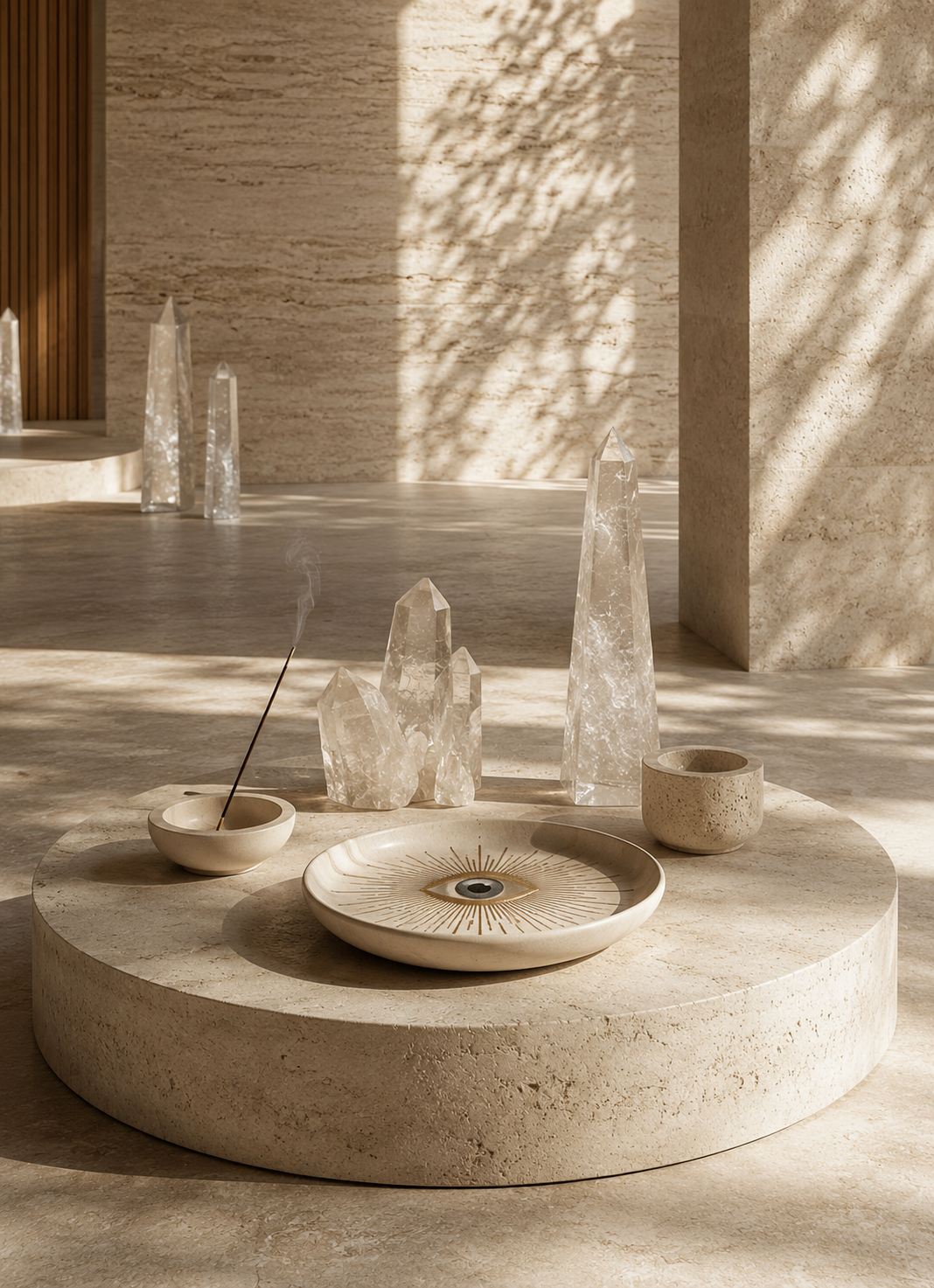
Kristalle kommen in modernen Feng-Shui- und spirituellen Wohninhalten häufig vor, sind für die Praxis von Feng Shui jedoch nicht erforderlich. Citrin, Bergkristall, grüner Phantomquarz und andere Steine werden in zeitgenössischen Kristalltraditionen häufig mit bestimmten Bedeutungen versehen; diese Zuordnungen sollten nicht mit garantierten Feng-Shui-Wirkungen verwechselt werden.
Ein Kristallbaum, ein Keramikobjekt, ein Foto, ein Erbstück oder ein Naturstein kann weiterhin wunderbar als visueller Blickfang dienen, wenn er eine persönliche Bedeutung hat. Die nützlichere Frage lautet weniger „Wird mich das reich machen?“ und eher „Woran erinnert mich dieser Gegenstand, wenn ich ihn sehe und was mir wichtig ist?“
Feng Shui ist mehr als das, was Sie kaufen
Ein Raum wird nicht zu „gutem Feng Shui“, nur weil er genügend Glücksbringer enthält. Beginnen Sie mit der Beziehung zwischen dem Raum und dem Alltag.
Reparieren Sie die Schublade, die nie richtig schließt. Räumen Sie den Stuhl frei, der zum dauerhaften Ablageort geworden ist. Stellen Sie eine Lampe dorthin, wo Sie tatsächlich Licht brauchen. Geben Sie den Schlüsseln einen festen Platz. Lassen Sie ein Regal größtenteils leer. Wenn Sie einen symbolischen Gegenstand verwenden, stellen Sie ihn auf, weil sich seine Bedeutung für Sie relevant anfühlt, nicht weil Sie Angst haben, dass ohne ihn etwas Schlimmes passieren könnte.
Wenn Sie einen sanfteren Ansatz für natürliche Texturen, bedeutungsvolle Gegenstände und alltägliche Rituale im Zuhause suchen, können Sie die Kollektion Achtsames Zuhause entdecken und nur auswählen, was sich ganz natürlich in Ihren Raum einfügt.
Feng Shui und Raumreinigung stehen miteinander in Verbindung - sind aber nicht dasselbe
Feng Shui und Raumreinigung werden in Gesprächen über spirituell gestaltete Wohnräume oft gemeinsam erwähnt, sind aber nicht austauschbar. Feng Shui befasst sich hauptsächlich mit der Beziehung zwischen Menschen, Anordnung, Ausrichtung, Form und Umgebung. Eine Raumreinigung ist in der Regel ein bewusstes Zurücksetzen eines Raums durch frische Luft, Klang, Rauch, Licht, Aufräumen oder ein symbolisches Ritual.
Wenn sich die Raumaufteilung Ihres Zuhauses gut anfühlt, der Raum sich nach Stress, Gästen oder Konflikten aber weiterhin emotional belastend anfühlt, könnte unser Leitfaden dazu, was Raumreinigung bedeutet, der nützlichere nächste Schritt sein.
Lassen Sie Ihr Zuhause den Alltag unterstützen
Feng Shui kann überwältigend werden, wenn jede Ecke wie eine Prüfung behandelt und jedem Gegenstand ein bestimmtes Versprechen zugeschrieben wird. Ein sanfterer Ansatz besteht darin, darauf zu achten, wie sich das Zuhause beim Betreten, Bewegen, Arbeiten, Ausruhen und Kümmern anfühlt.
Beginnen Sie mit einer praktischen Anpassung: Räumen Sie den Eingangsbereich frei, ändern Sie den Winkel eines Schreibtischs, schaffen Sie auf einer Oberfläche mehr Raum oder stellen Sie einen bedeutungsvollen Gegenstand an einen Ort, an dem er bewusster platziert wirkt.
Symbole, Tradition, Intuition und persönliche Bedeutung können alle ihren Platz haben. Sie müssen jedoch nicht die gesamte Bedeutung der Praxis tragen. Ein Zuhause muss nicht perfekt sein, um unterstützend zu wirken; manchmal reichen ein paar durchdachte Veränderungen aus, damit es sich geordneter anfühlt und man gerne dorthin zurückkehrt.
Häufig gestellte Fragen zu Feng Shui zu Hause
Was ist Feng Shui in einfachen Worten?
Feng Shui ist eine traditionelle chinesische Praxis, die sich mit der Beziehung zwischen Menschen und ihrer Umgebung befasst, einschließlich der Lage, Ausrichtung, Raumaufteilung und Anordnung von Bereichen. Verschiedene Schulen verwenden unterschiedliche Methoden, daher geht es um mehr als eine einzelne Liste von Dekorationsregeln.
Wo sollte ein Anfänger zu Hause mit Feng Shui beginnen?
Beginnen Sie mit den Orten, die Sie täglich nutzen. Sorgen Sie dafür, dass der Eingangsbereich leicht zugänglich ist, beseitigen Sie offensichtliche Hindernisse, achten Sie auf die Position Ihres Bettes oder Schreibtischs und reduzieren Sie das Durcheinander auf einer häufig genutzten Oberfläche. Himmelsrichtungen, Bagua-Karten und symbolische Gegenstände können später hinzukommen, wenn sie für Sie von Bedeutung sind.
Ist die Ecke ganz links immer die Feng-Shui-Wohlstandsecke?
Nein. Der Wohlstandsbereich ganz links stammt aus der BTB- oder Drei-Türen-Bagua-Methode, bei der die Karte am Eingang ausgerichtet wird. Auf dem Kompass basierende und andere Feng-Shui-Traditionen verwenden andere Methoden, daher sollte dies nicht als allgemeingültige Regel dargestellt werden.
Was ist die Befehlsposition im Feng Shui?
Die Befehlsposition bedeutet im Allgemeinen, ein Bett, einen Schreibtisch oder einen wichtigen Sitzplatz so zu platzieren, dass man den Eingang des Raumes sehen kann, ohne direkt auf einer Linie mit der Tür zu liegen - idealerweise mit einem Gefühl von Rückhalt hinter sich. Betrachten Sie dies als Orientierung und nicht als starre Vorgabe.
Braucht man Kristalle oder Feng-Shui-Gegenstände, um Feng Shui zu praktizieren?
Nein. Feng Shui erfordert keine Kristalle, Statuen oder besondere Dekoration. Raumaufteilung, Wege, Ausrichtung, Licht, Pflege und die Funktion eines Raumes sind grundlegender. Symbolische Gegenstände können einbezogen werden, wenn sie eine kulturelle oder persönliche Bedeutung haben, sind aber optional.